
6-32 Tap Drill Size: Use a #36 Drill
Use a #36 drill (0.1065 in., 2.705 mm) for a conventional 6-32 cutting tap. Compare nearby bits, lower-percentage threads and clearance holes.
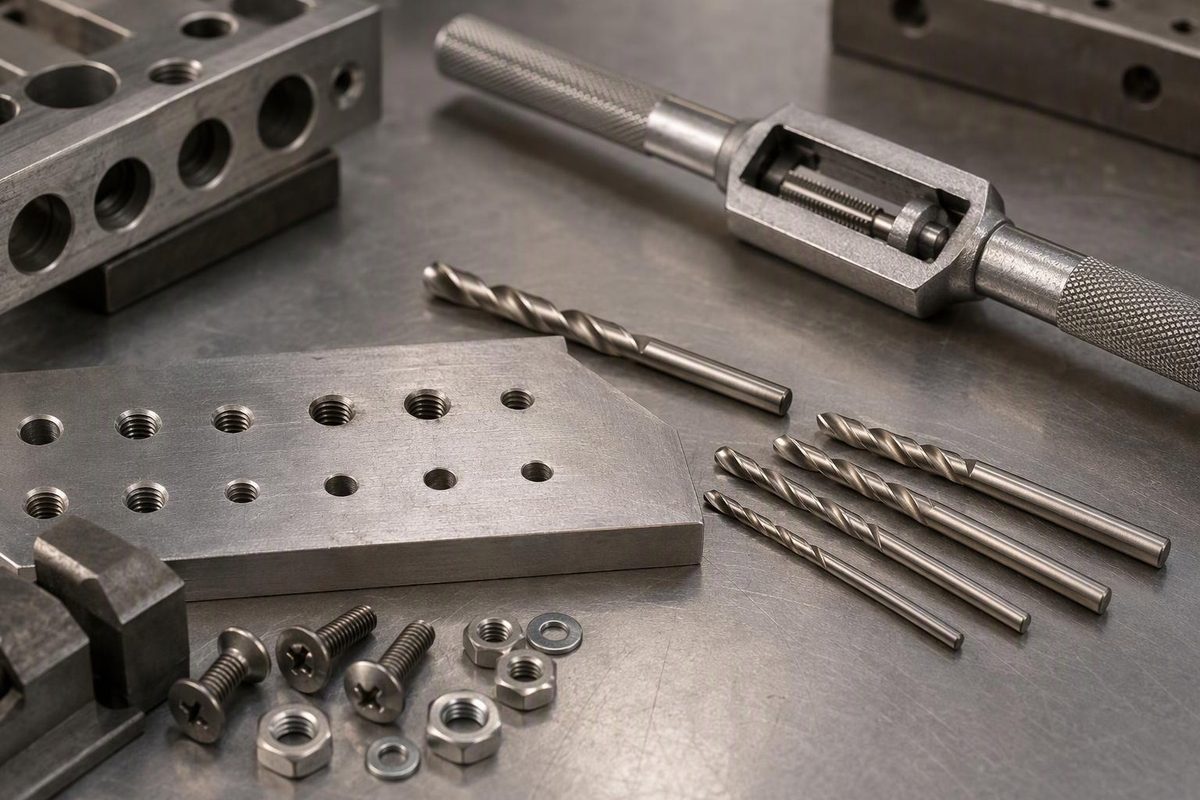
For a conventional 6-32 UNC cutting tap, use a #36 drill: 0.1065 inch (approximately 2.705 mm). LittleMachineShop lists this pairing in its nominal 75%-thread column, and DrillsandCutters’ listing for a Tap America 6-32 cutting tap also specifies a matching #36 bit. Follow your particular tap maker’s hole recommendation if it differs. (LittleMachineShop chart, Tap America product specifications)
The 6 identifies the screw size, with a nominal major diameter of 0.138 inch; 32 means 32 threads per inch. Neither number is the drill diameter. Confirm the full marking on the tap before drilling. (Thread dimensions)
Tap hole versus clearance hole
These holes do different jobs: a tap hole leaves material for internal threads; a clearance hole lets the screw pass through to a nut or another threaded part.
| Purpose for a 6-32 screw | Drill | Diameter |
|---|---|---|
| Conventional cutting-tap starting hole | #36 | 0.1065 in. |
| Lower-percentage cutting-tap hole | #32 | 0.1160 in. |
| Close-fit clearance hole | #27 | 0.1440 in. |
| Free-fit clearance hole | #25 | 0.1495 in. |
LittleMachineShop places #32 in its 50%-thread column for steel, stainless and iron, and #36 in its 75%-thread column for aluminum, brass and plastics. Those are chart categories—not a guarantee of finished thread geometry or joint strength. Choose a lower-percentage thread deliberately, with the required fit and engagement in mind. (Chart and material headings)
Can you use 7/64 inch or 2.7 mm?
A 2.7 mm drill is approximately 0.1063 inch, very close to #36 but not an exact conversion.
A 7/64-inch drill measures 0.109375 inch, about 0.0029 inch larger than #36. It leaves less material for the tap to cut, so do not label it an identical substitute. Published recommendations do vary: Coyote Steel’s general cutting-tap chart lists #35, 0.1100 inch, for 6-32. Use the recommendation for your tap and application rather than simply choosing the nearest bit in a fractional set. (Coyote Steel chart)
Do not use this cutting-tap lookup for a forming or roll tap. Forming taps displace material and require different starting-hole diameters; get that dimension from the tool maker. (Jarvis Cutting Tools)
Before tapping the finished part
- Clamp the stock securely, drill square to the intended thread axis, and lightly deburr the entrance.
- For a blind hole, allow for the drill point, tap lead and chip space: drilled depth is not the same as usable full-thread depth.
- Start the tap square with a suitable guide and use lubricant appropriate to the material. Stop if resistance rises sharply; do not force the tap. Big Gator Tools’ tap-guide instructions explain alignment and tapping-fluid use.
- Clean the finished hole and start a known-good 6-32 screw by hand. Check that it reaches the required engagement without bottoming. For a specified thread class, follow the required inspection procedure, including appropriate thread gauges; a screw-fit check alone does not certify it. (Vermont Gage’s inspection guidance)
For tool selection and the cutting sequence, see the tap and die set guide.